One of the biggest selling points when I bought my house was the sunlight in the backyard. I bought pots and filled them with bright blooms, placing them all around my yard. However, my attention to watering proved to be hit or miss, and one by one those flowers wilted. Eventually, I turned my attention indoors, filling my home with plants until it resembled a jungle.
That first summer in my new home, my focus was on fostering senior dogs and keeping my indoor greenery alive. It wasn’t until five years later that I started noticing a lone bee in the yard every so often, walking around instead of flying. I’d think, maybe I should buy some flowers for them, but as soon as I went inside, the thought disappeared.
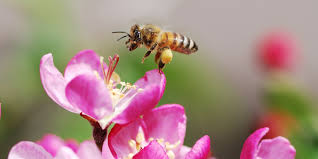
After two more years of seeing these occasional bees, curiosity got the better of me. I began to research why they might be wandering through my backyard. That’s when I learned they were probably exhausted and, with no flowers in sight, they may have been struggling to find food. I read about sugar water (one part white granulated sugar to one part water) and began mixing small batches to offer on a Q-tip. Sometimes it worked: a bee would extend its proboscis, drink deeply, and take off into the air. But more often, they either ignored it, darting around the yard in confusion, or drank but still never regained flight.
I stayed with them regardless of their situation, waiting for takeoff, only to watch many lose their ability to fly, then walk, until eventually they collapsed. It was heartbreaking. Why did bees that looked perfectly healthy die so slowly, often suffering for hours? The more I researched, the more I realized the painful truth: the bees had more than likely been exposed to toxic chemicals while foraging.
Two bees in particular changed the course of everything for me.
The first I met on a dusky evening walk during California’s wildfire season. I saw her, disoriented and vulnerable, standing in the middle of the sidewalk. I gently moved her under a tree and continued my walk. However, when I came back half an hour later, there she was, still clinging to a rock, looking healthy but frozen in place. I knew the dropping temperatures and ash filled sky would make it nearly impossible for her to find her hive.
I knew she would need some human intervention to help her survive the night, so I made her a temporary home: a container with air holes, a paper towel, and a cotton swab dipped in sugar water. To my amazement, she drank and regained her strength within minutes. But with nightfall and smoke settling in, I decided to keep her safe inside overnight. The next day, after the air was more clear and the sun was out, I opened the container. She flew straight out, but before she left, she circled me and then traced a figure eight before soaring into the sky. Later I learned bees sometimes do this to bookmark a safe place for food and shelter. Tears welled in my eyes and I knew I needed to do something more for the bees.

The second bee I found didn’t survive. She looked strong at first and eagerly drank sugar water, giving me hope. Through the course of several hours, I tried giving her flowers to pollinate, shelter from the wind, even a safe box to rest. Though she quickly attempted to pollinate, continued to drink the sugar water, and practiced her flight repeatedly, she only grew weaker. By the next morning, she was gone, proboscis extended, legs folded under her.
That was the moment I made up my mind. I would do everything I could to protect the bees in my neighborhood.
I began researching pesticides, fungicides, and neonicotinoids, discovering how many plants sold in stores are pre-treated with toxins before they ever reach our gardens. I searched out safe growers, planted pollinator friendly flowers, started composting, and even made posters for my neighborhood with clear visuals of what to avoid and what safer alternatives to use when gardening. Slowly, I worked to turn my backyard into a haven for pollinators.
And from there, this blog was born.
Because small, everyday choices in our gardens can inspire change, shifting the world away from a “poison first” mindset and back toward natural, life giving solutions.
I often think about that last bee in my garage, fighting so hard to return to her hive and protect her queen. Bees live for something bigger than themselves.
This is Moore Than Honeybees, a reminder that their work, and ours, is about more than survival. It’s about building a future where every small effort matters, and where the world is left a little brighter than we found it.
With gratitude for golden wings,
Shelley
 Moore Than Honey